 FREE UK SHIPPING OVER £35!
The Spin Doctor Europadisc's Weekly Column
Early Music Catch-Up
29th March 2023
29th March 2023
 Wherever your particular tastes lie in the vast (and often uncharted) landscape of ‘early’ music, the past few months have seen a steady stream of admirable releases, only a few of which we’ve been able to review in any detail. Cherubini’s drastically edited 1804 version of Mozart’s Requiem (coupled with an equally fascinating account of Paisiello’s Mass for the coronation of Napoleon) on the Alpha label from Julien Chauvin and his Concert de la Loge was an ear opener for many. Another Alpha disc, Marais’s previously unrecorded opera Ariane et Bacchus, in a spellbinding account from Hervé Niquet and Le Concert Spirituel, is similarly revelatory, while a further disc we found space for, Handel’s Solomon directed by Leonardo García Alarcón on Ricercar, has been hailed by BBC Music magazine as ‘the best-ever recording of Solomon’ in a five-star review.
These are but the tip of a glorious iceberg, and for many discs we receive there simply isn’t the time or space to do justice. Hence these occasional ‘catch-ups’ of other releases that have aroused our interest. Starting at the earlier end of the spectrum, the latest instalment of the Orlando Consort’s ongoing survey of the music of Machaut for Hyperion has reached the Remede de Fortune, an imposing yet beguiling setting of the composer-poet’s own dit amoureux. Judiciously pruned to make space for some multi-voice numbers, the Orlandos’ account is shared between three singers, and its beguiling combination of words and music is performed with the group’s customary care and dedication. Two more releases in this series are planned: when complete, it will constitute not just the most comprehensive set dedicated to the 14th-century master’s music, but also one of the most consistently rewarding.
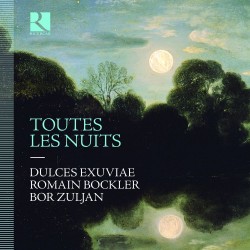
Another captivating disc of slightly later fare comes from the ensemble Dulces Exuviae (baritone Romain Bockler and lutenist Bor Zuljan) on Ricercar. Entitled ‘Toutes les nuits’, this collection of songs and lute fantasias contains some of the great figures of the mid-to-late Renaissance, from Tromboncino and Josquin to Palestrina and Lassus, often in genres with which they’re not normally associated. Imaginatively grouped under a series of nocturnal themes (Twilight, Solitude, Dream, Moonlight and Dream), the programme captures the solitude, comfort and fantasy that have become variously associated with the hours of night, and Bockler and Zuljan’s performances have a dreamlike quality to them that is constantly engaging. There’s also a surprising (and surprisingly apt) postscript from the pens of Lennon and McCartney!
At this time of year, the hours of darkness are associated in the church calendar with the Holy Week offices of Tenebrae, and a recent release from enterprising Chateau de Versailles Spectacles entitled ‘Ténèbres et Abysses’ brings together settings by Lalande and the less well-known Joseph Michel, Pierre-Louis Pollio and Joseph-Hector Fiocco. Performed with immense stylishness by soprano Eugénie Lefebvre and Ensemble Leviathan directed by Lucile Tessier, the programme is complemented with comfortingly sweet-toned instrumental works by Joseph Boismortier and Antoine Forqueray, bringing a soothing balm to a disc that is altogether less ‘dark’ than you might suppose.
Also from Chateau de Versailles is a new recording of Lully’s 1678 tragédie lyrique Psyché from Christoph Rousset and Les Talens Lyriques (more usually encountered in their series of operas on the Aparte label). Headed by soprano Ambroisine Bré in the title role, the Francophone cast is a strong one, and the presentation is up to CVS’s usual high standards, making this an enticing prospect for lovers of French Baroque opera. And there’s a welcome re-release (on Glossa) of an opera of a century later, Grétry’s Andromaque – the composer’s sole contribution to the tragédie lyrique genre – from Hervé Niquet and co., again with an impressive cast, this one headed by Karine Deshayes.
Italy is usually counted the home of opera, but the Italian disc that caught our ears was the first complete recording of the Neapolitan Francesco Durante’s concertos for strings. Durante (a contemporary of JS Bach) was known for his contrapuntal gifts, and if the collection of nine concertos is uneven, the best of them (like no.8 in A major which opens the two-disc set) are vividly involving, and performed with great commitment and style by the Accademia dell’Annunciata directed by Riccardo Doni. Works by Porpora and Fiorenza add variety to this fascinating release on the Arcana label. Another Arcana album, combining music by the Austrian-Italian early Baroque lutenist Kapsberger with contemporary music by theorbo player Stefano Maiorana (b. 1973), includes additional soundscapes from around Venice. Some of these will have changed little over the centuries, making this disc an enthralling meeting between past and present.
No ‘early music’ survey would be complete without the music of Bach. A new account of The Art of Fugue by the instrumentalists of the New Collegium on the Ramee label, entitled ‘Lemniscate’, includes some disarmingly (and sometimes alarmingly) fast tempi. But for those who crave instrumental variety as well as stylishness in this music, this will be a welcome addition to an ever-growing catalogue of a work that was once thought too esoteric to sell records. The outstanding Bach release of recent months, however, has to be the third and final volume of viol consort Phantasm’s ‘The Well-Tempered Consort’ series on Linn. Combining arrangements of movements from The Well-Tempered Clavier and the mighty collection of chorale-based organ works from Clavierübung III, as well as the imposing central section of the Fantasia in G major, BWV 572, this is performed with such a combination of intelligence and engagement that it must count as the best of a series that has already earned many critical accolades.
Finally – bringing us right up to the Classical period – two Haydn releases: the rarely recorded Stabat mater receives a typically challenging recording from René Jacobs at the helm of the Zürcher Sing-Akademie and Kammerorchester Basel on Pentatone – ideal for those looking for an alternative (and what a glorious one!) to the seasonal Passion settings this Holy Week. Meanwhile, Giovanni Antonini’s Haydn 2032 survey of the complete symphonies om Pentatone reaches volume 13 in particular style, with the expert instrumentalists of Il Giardino Armonico rising to the challenges of three of the composer’s finest mid-period symphonies, all featuring prominent horn parts: nos. 48 (‘Maria Theresa’), 59 (‘Fire’) and 31 (‘Horn Signal’). The stratospherically high writing of the ‘Maria Theresa’ will have your eyes watering in sympathy, while the ‘Horn Signal’ features no fewer than four horns, as well as solos for just about every instrument from top to bottom of the orchestra. This is another peach in an outstanding series.
Other forthcoming highlights include Bach cantatas and Dowland’s complete Lachrimae (both on Alpha), a fascinating and varied ‘German Baroque Requiem’ from Vox Luminis on Ricercar, and – looking still further ahead – a stunning new account of Handel’s opera Serse from the award-winning combination of the English Consort, Harry Bicket and Linn records. Stay tuned!
Our Top Early Music Picks:
Toutes les nuits (Dulces Exuviae) RIC446
Ténèbres et Abysses (Ensemble Leviathan) CVS092
Durante - Concerti per archi (Accademia dell’Annunciata) A540
JS Bach - The Well-Tempered Consort Vol.3 (Phantasm) CKD708
Haydn 2032 Vol.13: Hornsignal (Antonini) ALPHA692
Latest Posts
Music of the Iberian Peninsula, Part 3: More observations on the Golden Age
16th June 2026
Our last visit to the Iberian peninsula, a fortnight ago, was an insanely ambitious, necessarily broad-brush survey of the Spanish and Portuguese Golden Age, covering vocal and instrumental music, the sacred and the secular. This week, we take a more concise and (I hope) focussed look at a few of the sacred vocal masterpieces which exemplify the particular fervour and intensity of this remarkable period of musical history. They reflect the special place the peninsula had as a bulwark against the Reformation that had taken... read more
read more
Music of the Iberian Peninsula, Part 3: More observations on the Golden Age
16th June 2026
Our last visit to the Iberian peninsula, a fortnight ago, was an insanely ambitious, necessarily broad-brush survey of the Spanish and Portuguese Golden Age, covering vocal and instrumental music, the sacred and the secular. This week, we take a more concise and (I hope) focussed look at a few of the sacred vocal masterpieces which exemplify the particular fervour and intensity of this remarkable period of musical history. They reflect the special place the peninsula had as a bulwark against the Reformation that had taken... read more
read more
Carl Schachter, Arnold Whittall, and why music analysis matters
9th June 2026
Two recent deaths have robbed the world of music analysis of a pair of its most revered figures. Carl Schachter, who has died at the age of 93, was a pupil of (and subsequently collaborator with) Felix Salzer, himself one of Heinrich Schenker’s foremost students. Schachter continued to enrich and broaden the teaching of Schenkerian analysis, including important work on its application to issues of rhythm (which Schenker, focussing on harmonic and contrapuntal matters, largely bypassed). His influence went well beyond the... read more
read more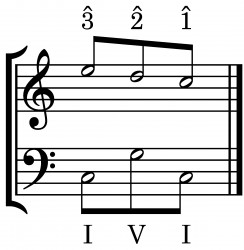
Carl Schachter, Arnold Whittall, and why music analysis matters
9th June 2026
Two recent deaths have robbed the world of music analysis of a pair of its most revered figures. Carl Schachter, who has died at the age of 93, was a pupil of (and subsequently collaborator with) Felix Salzer, himself one of Heinrich Schenker’s foremost students. Schachter continued to enrich and broaden the teaching of Schenkerian analysis, including important work on its application to issues of rhythm (which Schenker, focussing on harmonic and contrapuntal matters, largely bypassed). His influence went well beyond the... read more
read more
Music of the Iberian Peninsula, Part 2: ‘O quam gloriosum’ – The Spanish and Portuguese Golden Age
2nd June 2026
Over the past fortnight, I’ve been bathed in the most glorious, radiant, transformative light. Not the UK’s recent unseasonable heatwave, but the extraordinary vocal polyphony of the Siglo de Oro: the Spanish (and Portuguese) ‘Golden Century’. Extending from the late 15th to the early 17th century, this was a time of remarkable artistic flowering on the Iberian Peninsula, coinciding with the emergence of Spain and Portugal as global imperial powers with extensive colonial territories in the Americas, Africa and Asia. The... read more
read more