FREE UK SHIPPING OVER £35!

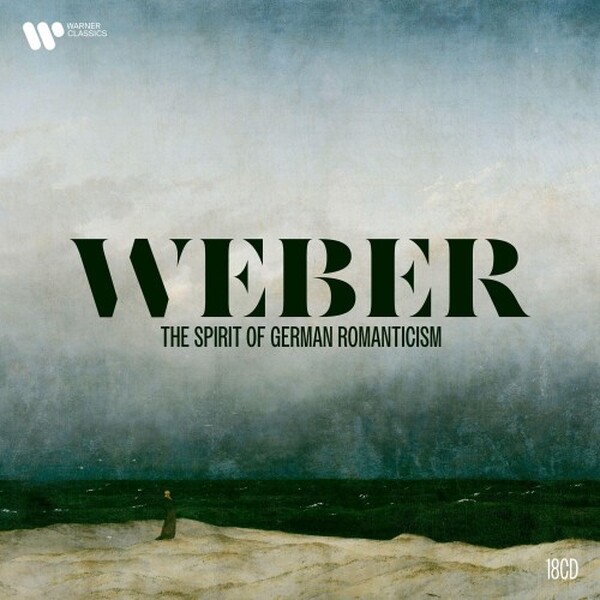
Weber: The Spirit of German Romanticism | Warner 2685411239

Weber: The Spirit of German Romanticism

£52.39 £45.95

save £6.44 (12%)

special offer ending 30/07/2026

Usually available for despatch within 5-8 working days

New Item

Label: Warner

Cat No: 2685411239

Barcode: 5026854112398

Format: CD

Number of Discs: 18

Release Date: 29th May 2026
Contents

Artists

Edda Moser (soprano)
Elisabeth Schwarzkopf (soprano)
Nicolai Gedda (tenor)
Ben Heppner (tenor)
Hermann Prey (baritone)
Sharon Kam (clarinet)
Sabine Meyer (clariner)
Gervase de Peyer (clarinet)
Barry Tuckwell (horn)
Gidon Kremer (violin)
Claudio Arrau (piano)
Thierry de Brunhoff (piano)
Paul Crossley (piano)
Consortium Classicum (ensemble)
London Classical Players (orchestra)
Philharmonia Orchestra (orchestra)

Conductors

Herbert Blomstedt
James Conlon
Alceo Galliera
Nikolaus Harnoncourt
Roger Norrington
Wolfgang Sawallisch

Works

Weber, Carl Maria von

Abu Hassan, J106
Adagio and Rondo, J115
Andante e Rondo ungarese, op.35 J158
Aufforderung zum Tanze (Invitation to the Dance), op.65 J260
Bassoon Concerto in F major, op.75 J127
Clarinet Concertino in E flat major, op.26 J109
Clarinet Concerto no.1 in F minor, op.73 J114
Clarinet Concerto no.2 in E flat major, op.74 J118
Clarinet Quintet in B flat major, op.34 J182
Der Freischutz, J277
Grand Duo concertant for clarinet and piano, op.48 J204
Horn Concertino in E minor, op.45 J188
Invitation to the Dance (Aufforderung zum Tanze), J260
Konzertstuck in F minor, op.79 J282
Missa sancta no.1, op.75a
Missa sancta no2, op.76
Oberon, J306
Piano Sonata no.2 in A flat major, op.39 J199
Piano Sonata no.4 in E minor, op.70 J287
Polacca brillante in E major, op.72 J268 'L'hilarite'
Rondo brillante, op.62 J252
Symphony no.1 in C major, op.19 J50
Symphony no.2 in C major, J51
Trio for flute, cello and piano in G minor, op.63 J259
Variations on a theme from 'Silvana', op.33

Artists

Edda Moser (soprano)
Elisabeth Schwarzkopf (soprano)
Nicolai Gedda (tenor)
Ben Heppner (tenor)
Hermann Prey (baritone)
Sharon Kam (clarinet)
Sabine Meyer (clariner)
Gervase de Peyer (clarinet)
Barry Tuckwell (horn)
Gidon Kremer (violin)
Claudio Arrau (piano)
Thierry de Brunhoff (piano)
Paul Crossley (piano)
Consortium Classicum (ensemble)
London Classical Players (orchestra)
Philharmonia Orchestra (orchestra)

Conductors

Herbert Blomstedt
James Conlon
Alceo Galliera
Nikolaus Harnoncourt
Roger Norrington
Wolfgang Sawallisch

About

5 June 2026 marks the 200th anniversary of Carl Maria von Weber’s death

A Cosmopolitan Artist vs. Nationalistic Labelling
Although history often labels Weber as the “inventor of German national opera” – fuelled by the massive success of Der Freischütz and later nationalistic praise from figures like Richard Wagner – he was actually a worldly, open-minded person. He avoided nationalistic thinking, learned multiple languages (French, Italian, English, Czech), and drew musical inspiration from diverse cultures, including Spain, Asia, and the Middle East.

The Path to Professional Mastery
Weber’s early life was difficult, marked by a physical hip deformity and a father who tried to market him as a “new Mozart”. Despite this rocky start and early reputation as a “conceited brat”, he developed into a disciplined professional through rigorous training under Abbé Vogler and years of practical experience managing theatres in Breslau, Prague, and Dresden.

Success through the Clarinet and Opera
Weber’s breakthrough was closely tied to his collaboration with clarinettist Heinrich Joseph Baermann. His mastery of the clarinet’s technical possibilities led to famous concertos that paved the way for his operatic triumphs. His masterpiece, Der Freischütz, became a cultural phenomenon, praised for its “Wolf’s Glen” scene and its balance between romantic nature and demonic forces.

A Life of Discipline Amidst Adversity
Weber’s career was defined by “passion and discipline”. He balanced a high-pressure professional life with personal challenges, including legal and financial troubles in Stuttgart, a long-pursued marriage to Caroline Brandt, and a lifelong battle with tuberculosis. He died in London at only 39 years old, shortly after the successful premiere of his final opera, Oberon.

Reference Recordings
To illustrate Weber’s genius, several highly recommended recordings have been selected: 

- Overtures: Philharmonia Orchestra / Wolfgang Sawallisch
- Symphonies: The London Classical Players / Roger Norrington
- Konzertstück in F minor, op.79: Claudio Arrau (piano), Philharmonia Orchestra / Alceo Galliera
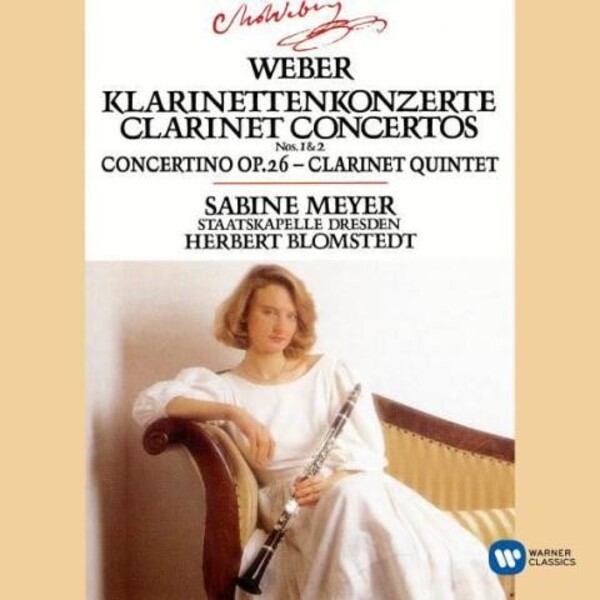
- Clarinet Works: Sabine Meyer and Sharon Kam
- Operas: Abu Hassan (Nicolai Gedda · Wolfgang Sawallisch); Der Freischütz (Gilles Cachemaille · Nikolaus Harnoncourt); Oberon (James Conlon).

The historical section also features a prestigious gathering of legendary conductors, including Nikisch, Toscanini, Furtwängler, Erich Kleiber, Böhm, Barbirolli, and Szell.

Contents:

CDs 1-3: Orchestral Music & Concertante Music
Overtures · Invitation to the Dance · Symphonies nos. 1 & 2 · Konzertstück for piano · Horn Concertino · Clarinet Concertos nos. 1 & 2 · Clarinet Concertino · Bassoon Concerto · Andante and Rondo ungarese

CD 4: Piano Music
Piano Sonatas nos. 2 & 4 · “La Gaîté” · Aufforderung zum Tanze · Polacca brillante

CDs 5-6: Chamber Music
Clarinet Quintet · Variations on a theme from “Silvana” · Grand duo concertant · Violin Sonata op.10b no.3 (exc.) · Trio for flute, cello and piano · Adagio and Rondo for 2 clarinets, 2 horns, 2 bassoons and double bass · Four Songs by Duke Leopold August of Gotha · Concertino for wind instruments (exc.)

CD 7: Transcriptions & Arrangements

CD 8: Works after Weber by Liszt, Wagner, Taffanel & Hindemith

CD 9: Lieder

CD 10: Choral Music
Missa sancta nos. 1 & 2

CDs 11-15: Operas
 Abu Hassan · Der Freischütz · Oberon

CDs 16-18: Historical Recordings from 1914-1958

Error on this page? Let us know here

Need more information on this product? Click here