 FREE UK SHIPPING OVER £35!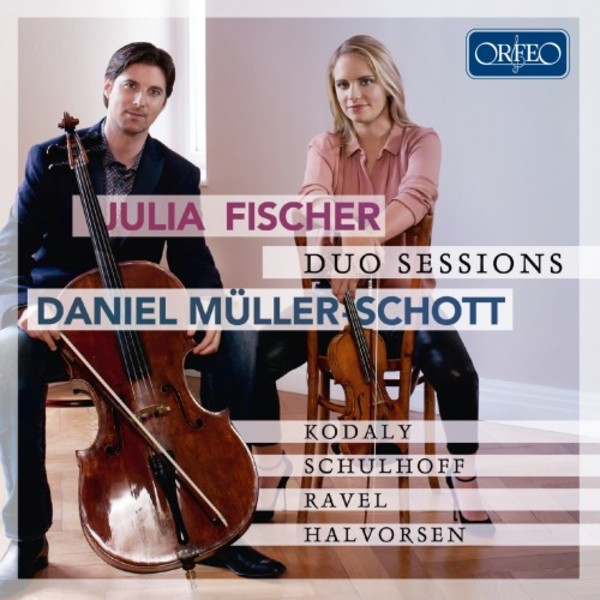
Duo Sessions: Kodaly, Schulhoff, Ravel, Halvorsen
£14.26
Currently out of stock at the UK suppliers. Available to order, but is likely to take longer than usual to despatch
Despatch Information
This despatch estimate is based on information from both our own stock and the UK supplier's stock. It is based on the assumption that you are ordering one copy - if you order multiple copies of the same item, the quoted leadtime may not apply.
If ordering multiple different items, we will aim to send everything together so the longest despatch estimate will apply to the complete order.
If you would rather receive certain items more quickly, please place them on a separate order.
If any unexpected delays occur, we will keep you informed of progress via email and not allow other items on the order to be held up.
If you would prefer to receive everything together regardless of any delay, please let us know via email.
Pre-orders will be despatched as close as possible to the release date.
New Item
Label: Orfeo
Cat No: C902161A
Barcode: 4011790902128
Format: CD
Number of Discs: 1
Genre: Instrumental
Release Date: 9th September 2016
 That pair of works [Kodály’s Duo and Ravel’s Sonata] are the mainstay of Julia Fischer and Daniel Müller-Schott’s disc together, too. But they play them with such energy, engagement and virtuoso precision that there’s never any hint of overfamiliarity; in both works, every detail of the extremely demanding string writing is carefully etched, and captured with tingling immediacy in the recording, whether it’s the rhapsodic lines of the Kodály, or the acerbic bitonal clashes of the Ravel. And between the two, they include another substantial piece, composed just after Ravel’s Sonata. The Duo for Violin and Cello, by Erwin Schulhoff, shows all the standard tendencies of 1920s
  Throughout, the precision of intonation and touch produces an impressive resonance and range of timbres brilliantly captured by the recording. Halvorsen’s ourageous Passacaglia makes for an exhilarating encore. For some, this might just knock the Capuçon brothers (Erato) off their current top spot.