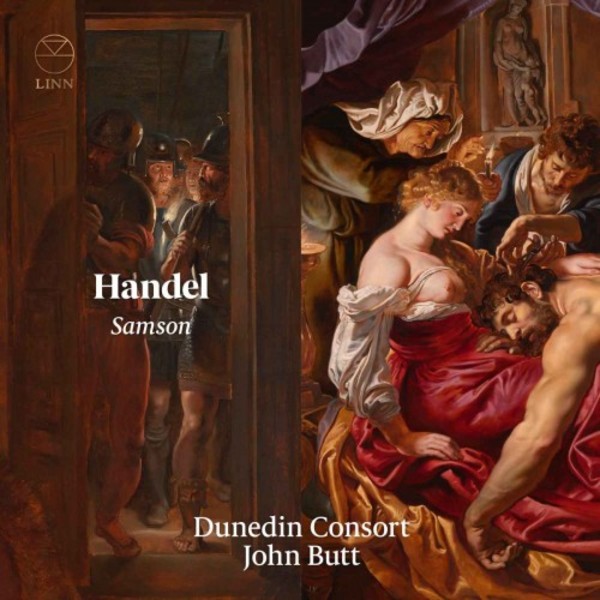
Linn Records: CKD319
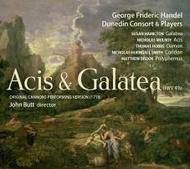
Handel - Acis and Galatea (original cannons performing version 1718) 
Normally: £11.75 NOW: £9.74 (£8.47 ex VAT) special offer ending 29/01/2009
Format: SACD
Number of Discs: 2
Genre: Vocal/Choral
Artist(s): Susan Hamilton, Nicholas Mulroy, Thomas Hobbs, Nicholas Hurndall Smith, Matthew Brook, Dunedin Consort & Players
Conductor(s): John Butt
Release Date: 3rd November 2008
More Details on Handel - Acis and Galatea (original cannons performing version 1718)
“A genuine sparkle which lifts Handel's music above the ordinary, and a fresh angle for just about every moment.” - The Scotsman
Acis and Galatea is the Dunedin Consort's second Handel recording and follows their hugely successful 1742 version of Messiah, which earned the group a Classic FM Gramophone Award for "Best Baroque Vocal Album" in 2007 and a Midem Award in 2008.
The Dunedin Consort continues its critically acclaimed practice of recording unusual but authentic recording versions of well-known works; Acis and Galatea is no exception. The Consort has recorded the Original Cannons Performing Version from 1718.
There are notable differences in the Cannons version including changes in instrumentation and vocal scoring (there is no alto line) made by Handel to suit the forces at Cannons. This includes one-to-a-part choruses, in a similar manner to the choruses in the Consort’s Matthew Passion recording.
Director John Butt chose this version because of the small forces involved (which was one of the aspects that made Messiah so distinctive) and although there have been 'first versions' of Acis recorded before, Butt felt that there were certain aspects of the original version that had not yet been sufficiently realised.
Acis and Galatea is a beautiful pastoral entertainment, Handel's first dramatic work in English, with a simple yet highly emotional story that encompasses the extremes of love and tragedy.
In 2007, the Dunedin Consort’s tenth anniversary year, the group reached a new level of critical acclaim, culminating in the Classic FM Gramophone Award for Messiah in the Baroque Vocal category. This is the only such award presented to a Scottish group in recent years (and the first to an ensemble that is not a Scottish National Company or BBC orchestra) and now gives the Dunedin Consort a truly international reputation.
The Dunedin Consort has won praise for the natural style of their soloists (an authoritative bass and a superb contralto The Guardian) and renown for the virtuosity of the singers.
The Dunedin Consort has appeared at festivals in Belgium, Canada, France, Italy, Spain, Northern Ireland and the Channel Islands as well as at the Edinburgh International Festival, has appeared on BBC 2 and BBC 4 television and been broadcast on BBC Radio 3 and BBC Scotland.
Acis and Galatea is the Dunedin Consort's second Handel recording and follows their hugely successful 1742 version of Messiah, which earned the group a Classic FM Gramophone Award for "Best Baroque Vocal Album" in 2007 and a Midem Award in 2008.
The Dunedin Consort continues its critically acclaimed practice of recording unusual but authentic recording versions of well-known works; Acis and Galatea is no exception. The Consort has recorded the Original Cannons Performing Version from 1718.
There are notable differences in the Cannons version including changes in instrumentation and vocal scoring (there is no alto line) made by Handel to suit the forces at Cannons. This includes one-to-a-part choruses, in a similar manner to the choruses in the Consort’s Matthew Passion recording.
Director John Butt chose this version because of the small forces involved (which was one of the aspects that made Messiah so distinctive) and although there have been 'first versions' of Acis recorded before, Butt felt that there were certain aspects of the original version that had not yet been sufficiently realised.
Acis and Galatea is a beautiful pastoral entertainment, Handel's first dramatic work in English, with a simple yet highly emotional story that encompasses the extremes of love and tragedy.
In 2007, the Dunedin Consort’s tenth anniversary year, the group reached a new level of critical acclaim, culminating in the Classic FM Gramophone Award for Messiah in the Baroque Vocal category. This is the only such award presented to a Scottish group in recent years (and the first to an ensemble that is not a Scottish National Company or BBC orchestra) and now gives the Dunedin Consort a truly international reputation.
The Dunedin Consort has won praise for the natural style of their soloists (an authoritative bass and a superb contralto The Guardian) and renown for the virtuosity of the singers.
The Dunedin Consort has appeared at festivals in Belgium, Canada, France, Italy, Spain, Northern Ireland and the Channel Islands as well as at the Edinburgh International Festival, has appeared on BBC 2 and BBC 4 television and been broadcast on BBC Radio 3 and BBC Scotland.