FREE UK SHIPPING OVER £35!

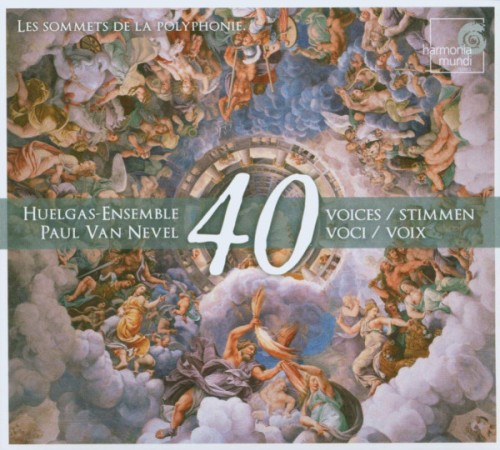
40 Voices (USED)

£4.95

In stock - available for despatch within 1 working day

Used - Mint

Seal-wrapped: Yes

Label: Harmonia Mundi

Cat No: HMC801954

Barcode: 0794881818662

Format: CD

Number of Discs: 1

Genre: Vocal/Choral

Release Year: 2007
This is a used product

Contents

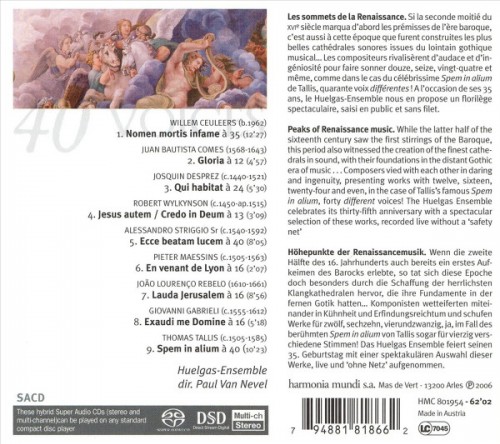
Works

Willem Ceuleers
Nomen mortis infame

Joan Baptista Comes
Gloria

Josquin Despres
Qui habitat

Giovanni Gabrieli
Exaudi me Domine

Pieter Maessins
En venant de Lyon

Joao Soares Lourenco Rebelo
Lauda Jerusalem

Alessandro Striggio
Ecce beatam lucem

Thomas Tallis
Spem in alium for eight five-part choirs ’40-part Motet’

Robert Wylkynson
Jesus autem transiens; Credo in Deum

Artists

Heulgas Ensemble

Conductor

Paul van Nevel

Works

Willem Ceuleers
Nomen mortis infame

Joan Baptista Comes
Gloria

Josquin Despres
Qui habitat

Giovanni Gabrieli
Exaudi me Domine

Pieter Maessins
En venant de Lyon

Joao Soares Lourenco Rebelo
Lauda Jerusalem

Alessandro Striggio
Ecce beatam lucem

Thomas Tallis
Spem in alium for eight five-part choirs ’40-part Motet’

Robert Wylkynson
Jesus autem transiens; Credo in Deum

Artists

Heulgas Ensemble

Conductor

Paul van Nevel

About

While the latter half of the 16th century saw the first stirrings of the Baroque, this period also witnessed the creation of the finest cathedrals in sound, with their foundations in the distant Gothic era of music. Composers vied with each other in daring and ingenuity, presenting works with 12, 16, 24 and even, in the case of Tallis' famous Spem in alium, 40 different voices.
 
Huelgas-Ensemble celebrates its 35th anniversary with a spectacular selection of these works, recorded live without a safety net. This recording begins not with a piece from the Renaissance, however, but with a work by contemporary
composer Willem Ceuleers (b.1963) to a text by Petrarch. Written for 35 voices, to mark 35 years since the founding of the Huelgas Ensemble, Ceuleers uses the group's name as a soggetto cavato, with each letter corresponding to a note: B (H) - C (ut = U) - E - A (la = L) - G - A - B (si = S). The theme thus formed is quoted 35 times in the course of the piece. His composition is entirely built on the old contrapuntal techniques of canon, imitation, quotations of a cantus firmus, false relations and polychorality, with now and then a wink in the direction of the more adventurous composers of the Renaissance, making Nomen mortis a truly timeless work.

Error on this page? Let us know here

Need more information on this product? Click here