FREE UK SHIPPING OVER £35!

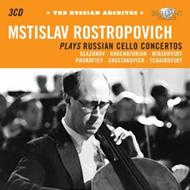
Mstislav Rostropovich plays Russian Cello Music | Brilliant Classics 9240

Mstislav Rostropovich plays Russian Cello Music

New Item

Label: Brilliant Classics

Cat No: 9240

Barcode: 5029365924023

Format: CD

Number of Discs: 3

Release Date: 17th October 2011

This product has now been deleted. Information is for reference only.

Contents

Works

Prokofiev
Symphony-Concerto for Cello & Orchestra in E minor Op.125

Miaskovsky
Cello Concerto in C minor Op.66

Tchaikovsky
Variations On A Rococo Theme, Op.33

Tchaikovsky
Pezzo Capriccioso, in B minor Op.62

Glazunov
Minstrel Song, for Cello & Orchestra Op.7

Glazunov
Melody

Khatchaturian
Concerto Rhapsody for Cello & Orchestra

Shostakovich
Cello Concerto No.1 Op.107

Tishchenko
Concerto for Cello & 17 wind instruments & percussion

Vlasov
Cello Concerto

Artists

Mstislav Rostropovich (cello)

Conductors

Gennady Rozhdestvensky
Evgeny Svetlanov
Kyrill Kondrashin

Works

Prokofiev
Symphony-Concerto for Cello & Orchestra in E minor Op.125

Miaskovsky
Cello Concerto in C minor Op.66

Tchaikovsky
Variations On A Rococo Theme, Op.33

Tchaikovsky
Pezzo Capriccioso, in B minor Op.62

Glazunov
Minstrel Song, for Cello & Orchestra Op.7

Glazunov
Melody

Khatchaturian
Concerto Rhapsody for Cello & Orchestra

Shostakovich
Cello Concerto No.1 Op.107

Tishchenko
Concerto for Cello & 17 wind instruments & percussion

Vlasov
Cello Concerto

Artists

Mstislav Rostropovich (cello)

Conductors

Gennady Rozhdestvensky
Evgeny Svetlanov
Kyrill Kondrashin

About

Mstislav Rostropovich was born in 1927 in the oil-rich town of Baku on the Caspian Sea. His mother was a pianist, and his father a cellist who had studied with Pablo Casals. Mstislav went to the Moscow Conservatory where he had composition studies with Shostakovich – this would see the start of a long and fruitful friendship with the composer.

He won the Stalin Prize twice in the 1950s – a dubious honour for a man who became one of the regime’s most outspoken artistic dissidents. Even so, he was allowed to continue his travels in the West, settling in the UK, and finally being deprived of his Soviet citizenship in 1978. He returned to Russia in 1990 when Boris Yeltsin’s reforms led the way to a more open society and political system.

Although his repertoire was wide-ranging, from Bach through the Romantic masters to 20th-century giants such as Britten and Shostakovich, it was his fellow countryman’s music that he was especially committed to, especially young composers such as Vlasov and Tishchenko.

Error on this page? Let us know here

Need more information on this product? Click here