FREE UK SHIPPING OVER £35!

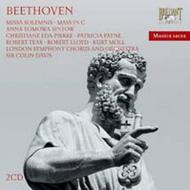
Beethoven - Missa Solemnis, Mass in C | Brilliant Classics 93943

Beethoven - Missa Solemnis, Mass in C

New Item

Label: Brilliant Classics

Cat No: 93943

Barcode: 5028421939438

Format: CD

Number of Discs: 2

Genre: Vocal/Choral

Release Date: 24th August 2009

This product has now been deleted. Information is for reference only.

Contents

Works

Beethoven
Missa solemnis in D Op.123

Beethoven
Mass in C Op.86

Artists

Anna Tomowa-Sintow (soprano)
Christiane Eda-Pierre (soprano)
Patricia Payne (alto)
Robert Tear (tenor)
Robert Lloyd (bass)
Kurt Moll (bass)
London Symphony Orchestra & Chorus

Conductor

Sir Colin Davis

Works

Beethoven
Missa solemnis in D Op.123

Beethoven
Mass in C Op.86

Artists

Anna Tomowa-Sintow (soprano)
Christiane Eda-Pierre (soprano)
Patricia Payne (alto)
Robert Tear (tenor)
Robert Lloyd (bass)
Kurt Moll (bass)
London Symphony Orchestra & Chorus

Conductor

Sir Colin Davis

About

Beethoven’s Mass in C (1807) has always suffered adversely when compared with its larger companion, the late Missa solemnis in D. While there is no doubting the superiority of the later Mass setting, it pays to consider the earlier work on its merits. When compared with the ‘state of the art’ Mass settings of the time, the listener will readily appreciate that Beethoven’s C major Mass is a remarkable work, and a major composition of his middle period.

Three aspects of the work distinguish it from the Mass settings of other composers. First, the sheer energy and verve of the music – this is first-rate Beethoven – secondly, the huge attention and care he made when setting the text, and thirdly, the major role given to the choir rather than the soloists. This was a departure from the Masses of Haydn, Mozart, and indeed Beethoven’s friend Hummel.

From the heart – may it return to the heart’, wrote Beethoven at the top of the score of his Missa solemnis. This inscription underlines the importance of the work to him, and he considered it among his greatest compositions. Conceived in 1819 after a fallow creative period of several years (during which Beethoven wrote to his old teacher Antonio Salieri asking for advice) for the installation of his friend and patron Archduke Rudolph as Archbishop of Olmutz, it wasn’t finished until 1822. Conceived on a vast scale, Beethoven never intended it for church use. He hoped to instil religious feelings in those who heard the work.

The violin concerto-like solo that introduces the Sanctus, and the violent, militaristic outbursts in the Agnus Dei leave a lasting impression on the listener. It was one of the first works of Beethoven’s visionary late period that includes the last string quartets and piano sonatas, and the Ninth Symphony.

Error on this page? Let us know here

Need more information on this product? Click here