FREE UK SHIPPING OVER £35!

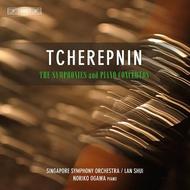
Tcherepnin - Complete Piano Concertos | Brilliant Classics 9232

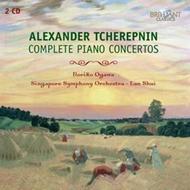
Tcherepnin - Complete Piano Concertos

New Item

Label: Brilliant Classics

Cat No: 9232

Barcode: 5029365923224

Format: CD

Number of Discs: 2

Genre: Orchestral

Release Date: 22nd August 2011
This product has now been deleted. Information is for reference only.

Contents

About

Alexander Tcherepnin was the central figure in a significant Russian musical dynasty. His father Nikolai, a distinguished composer and conductor, wrote the first ballet for Diaghiliv’s Ballet Russes, and Alexander's son Ivan, and two gransdons Serge and Stefan, are also composers. The young Alexander soon became a prolific composer, and became friendly with one of his father pupils, Serge Prokofiev, 8 years his senior. Prokofiev often came to the family home to play his early piano works.

As the revolution and civil war closed in on St Petersburg (Petrograd), Nikolai moved the family to Georgia. The wealth of Georgian folk music fascinated Alexander and would influence his later music. When the revolution finally reached Tblisi, the family moved to Paris.

Tcherepnin’s music has been described as spontaneous, fresh and pure in style. It has also been described as a blend of the romantic traditions of Rachmaninov and Scriabin, with the satire and grotesquerie of the young Prokofiev.

The 6 piano concertos span the years 1919–65. The first is similar to Prokofiev’s 1st concerto. A one-movement work and a brilliant concerto debut. The 2nd concerto is a powerful work with great lyricism, whilst the 3rd is edgy, tense and displays an overtly modernistic style The 4th was inspired by Chinese folklore. No.5 was commissioned by the Berlin Festival, and was premiered in 1963. The piano part is brilliant and challenging. The 6th concerto, from 1965 and premiered in 1972 in Lucerne under Kubelik, is a summation of the composers work and wisdom. A large percussion section adds to the lively nature of the outer movements, framing a lushly romantic Andantino, which harks back to Rimsky’s Russian-oriental style.

Error on this page? Let us know here

Need more information on this product? Click here